
Networking
What Is a Proxy Server?
How proxies relay application traffic and how they differ from broader privacy tools.
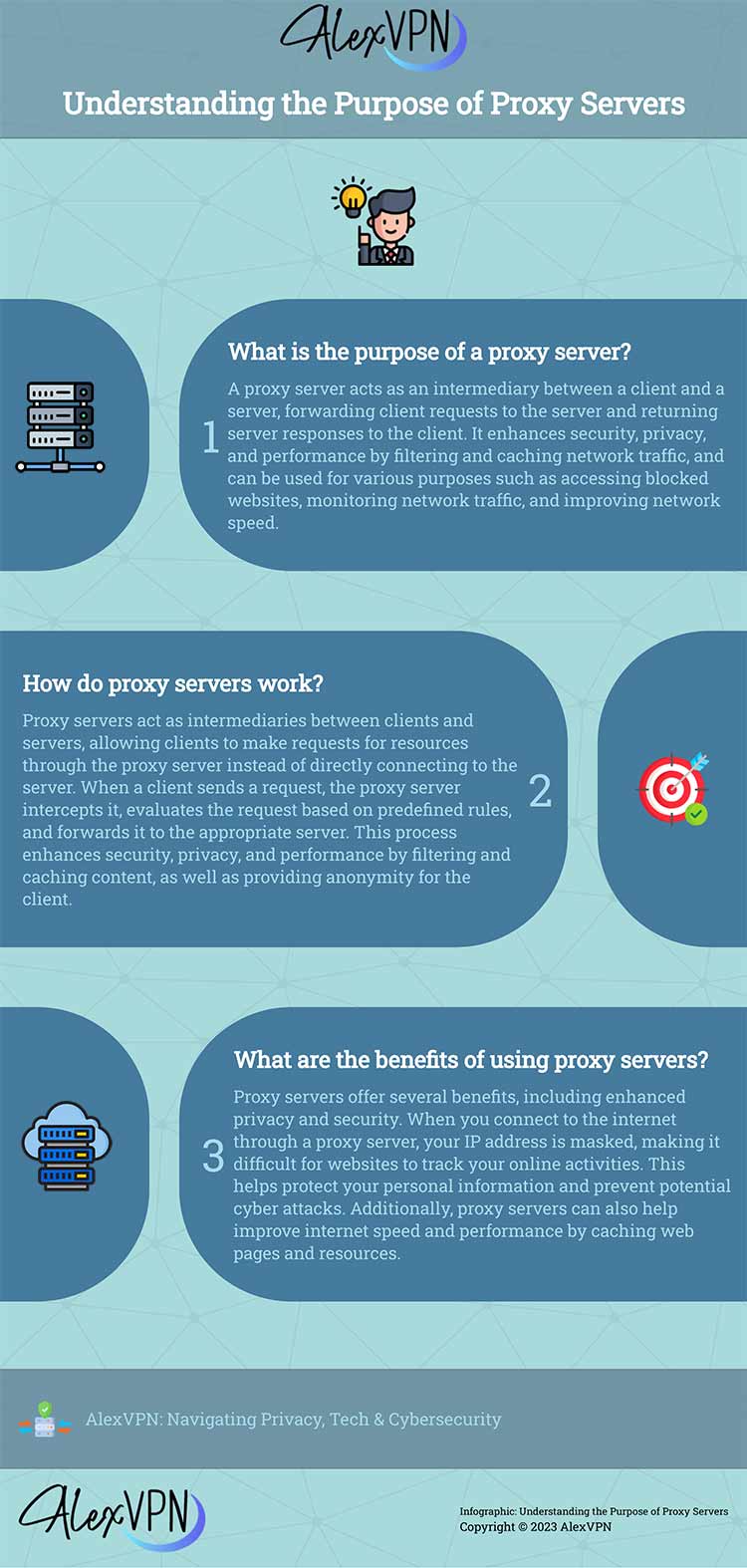
A proxy server receives a request from a client and forwards it to another destination. It can provide filtering, caching, access control or a different visible network address.
Forward and reverse proxies
A forward proxy acts for clients, such as devices inside an organization. A reverse proxy sits in front of servers and can distribute traffic, terminate encryption or shield the origin infrastructure.
Coverage varies
A proxy configured in one browser may affect only that browser. Other applications can continue using the normal connection. Encryption also depends on the proxy type and the destination protocol.
Trust still matters
The proxy operator may be able to observe connection details and, for unencrypted traffic, content. Unknown free proxies can create more privacy risk than they solve.
The bottom line
Use a proxy for a defined networking job. If you need device-wide encrypted tunneling, compare the requirement with a properly configured VPN.