
Networking
Proxy vs. VPN: The Practical Differences
Both proxies and VPNs can route traffic through another server, but they differ in encryption, scope and typical use cases.
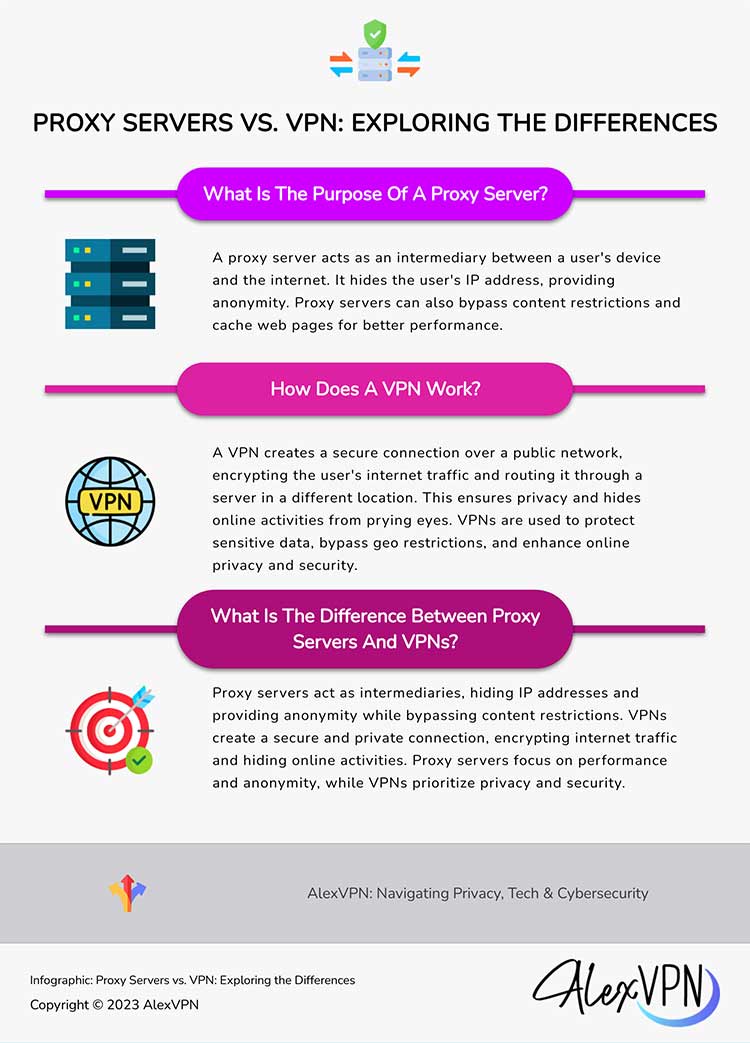
Proxies and VPNs share one basic idea: your traffic can pass through another server before reaching its destination. The important differences are which traffic is routed, how it is protected, and what problem you are trying to solve.
Proxy servers
A proxy usually works at the application or protocol level. A browser can be configured to use an HTTP proxy, for example, while other applications on the same computer continue connecting normally.
Proxies are useful for controlled routing, caching, filtering, testing, access management and many server-side tasks. Encryption depends on the protocol and the traffic being carried; simply using a proxy does not automatically encrypt everything leaving your device.
VPNs
A consumer VPN application typically creates a system-level tunnel. Once connected, much more of the device’s network traffic is routed through the VPN server. The tunnel itself is encrypted between your device and that server.
This makes a VPN more convenient when your goal is broad network privacy rather than routing one application through a specific intermediary.
Which should you use?
Use a proxy when you need targeted routing or an application-specific network tool. Use a VPN when you want a device-level encrypted tunnel and a different public IP address for most of your internet traffic.
Neither option makes you anonymous by itself, and neither replaces endpoint security.