
Cybersecurity
VPN vs. Antivirus: What Each One Actually Protects
VPNs and antivirus software solve different security problems. Here is where each fits and why many people need both.
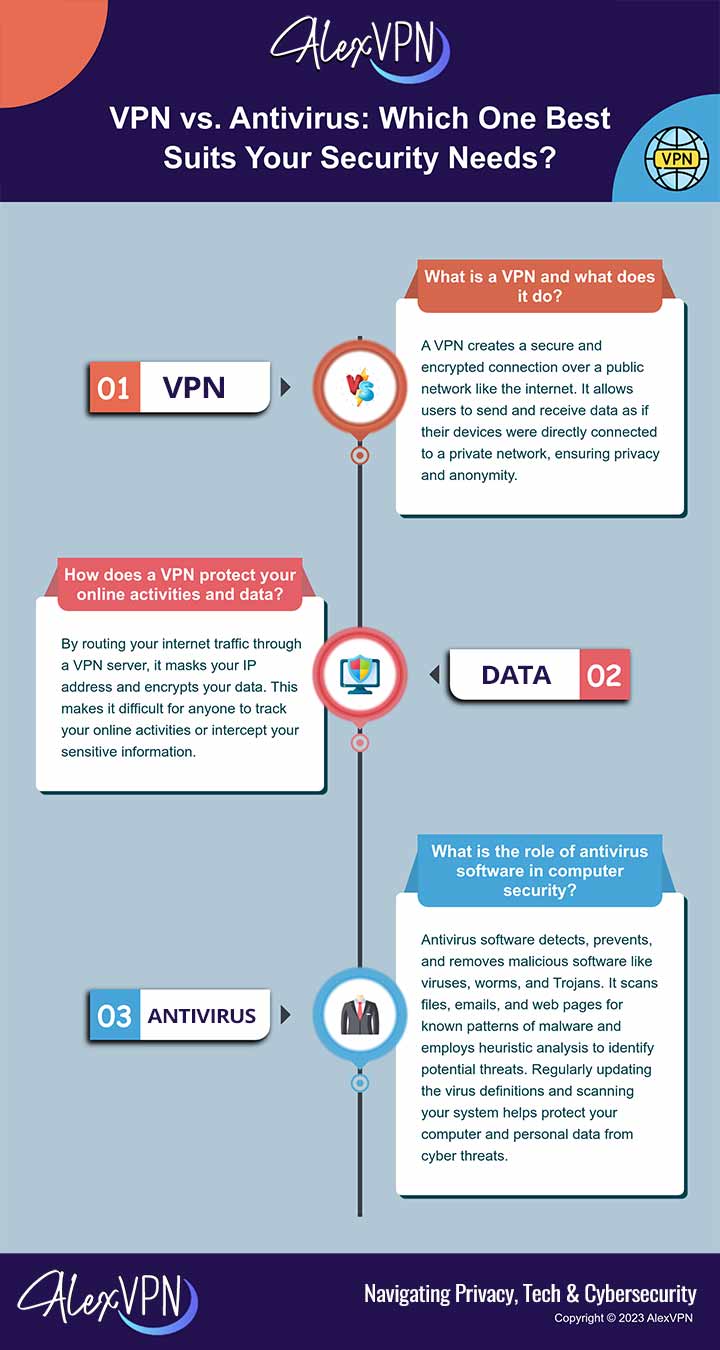
A VPN and antivirus software are both described as security tools, but they protect different parts of your digital life.
A VPN protects network traffic between your device and a VPN server. Antivirus and anti-malware software protect the device itself by detecting or blocking malicious software and suspicious activity.
What a VPN protects
A VPN encrypts network traffic on the way to the VPN server and replaces your normal public IP address with the server’s address for most web traffic. This can reduce exposure on public Wi‑Fi and limit what the local network or internet provider can learn from unencrypted traffic patterns.
A VPN cannot reliably tell whether a file you just downloaded contains malware. It also cannot stop a malicious program that is already running on your computer.
What antivirus protects
Antivirus software examines files, processes and system activity for known or suspicious malicious behavior. Modern security tools may also block dangerous websites, ransomware behavior and unwanted applications.
Antivirus does not normally hide your IP address or create an encrypted tunnel for all of your internet traffic.
Do you need both?
For many users, yes. They are complementary layers. Keep your operating system and browser updated, use reputable security software where appropriate, turn on multi-factor authentication, and use a VPN when you have a clear network-privacy reason to do so.
The important point is not to expect one tool to perform the other tool’s job.